

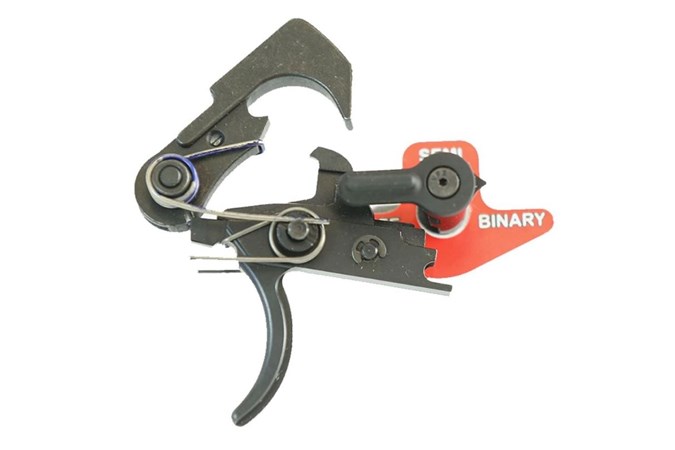
A binary trigger AR-15 system has become one of the most talked-about upgrades among firearm enthusiasts, especially for those who want a faster firing cadence while maintaining semi-automatic function. In this detailed guide, we break down exactly how a binary trigger works inside the AR-15 platform. We focus solely on a clear, technical, and responsible explanation—without any modification instructions or unsafe guidance. This article provides deep insight into the internal mechanics, core operating stages, benefits, limitations, and safety features of binary triggers.
What Is a Binary Trigger?
A binary trigger is a specialized trigger system designed to fire one round on the pull and a second round on the release. While this firing cycle is much faster than a standard semi-automatic trigger, the firearm remains legally semi-automatic because every shot still requires a distinct mechanical action.
Binary triggers are commonly used for:
-
Target shooting
-
Recreational range firing
-
Speed shooting competitions
-
Training drills requiring quick follow-up shots
One of the most recognizable options on the market is the Franklin Binary Trigger, known for its smooth operation and consistent performance.
Key Operating Modes of a Binary Trigger
Most binary triggers for AR-15 platforms include three distinct selector positions:
1. Safe Mode
The trigger will not fire under any circumstance.
Both the pull and release stages are blocked, securing the hammer and providing complete mechanical lockout.
2. Semi Mode
This mode replicates normal AR-15 function:
-
One shot per trigger pull
-
No action on release
-
The hammer resets as the shooter releases pressure
3. Binary Mode
This is the defining feature of the system:
-
The rifle fires one round on the pull
-
The rifle fires another round on the release
Although this results in a faster firing cadence, each stage still requires deliberate mechanical engagement from the shooter.
Internal Mechanics: How the Pull Action Works
When the shooter pulls the trigger in binary mode, several internal components engage simultaneously:
-
The primary sear releases the hammer.
-
The hammer strikes the firing pin.
-
The round is ignited, and the bolt carrier group cycles rearward.
-
As the bolt cycles, the hammer is forced back.
-
A secondary disconnector catches and holds the hammer as long as the trigger remains depressed.
This secondary disconnector is crucial because it prevents the hammer from following the bolt or firing unintentionally.
Internal Mechanics: How the Release Action Works
The release stage is the second mechanical action that fires another round:
-
As the shooter releases the trigger, pressure changes within the trigger group.
-
The secondary disconnector hands off the hammer to a specially designed sear surface.
-
When the trigger moves fully forward, this sear releases the hammer again.
-
This results in a controlled second shot.
The release action is intentional, mechanical, and independent from the pull action.
Specialized Components That Enable Binary Operation
Binary triggers feature upgraded and additional parts not found in standard AR-15 fire control groups. These include:
Dual Disconnectors
These ensure the hammer is held securely after the pull shot and correctly released for the release shot.
Sear Geometry Enhancements
Carefully machined sear surfaces manage the timing, angle, and movement of the hammer.
Selector Additions
The three-position selector gives shooters complete control over firing mode, including the option to cancel a release shot.
Precision-Tuned Springs
Stronger or specially tensioned springs allow clean engagement during rapid cycling.
Each component is engineered to maintain reliability and prevent unintentional discharge.
Safety Features Built Into Binary Triggers
Responsible engineering ensures binary triggers remain predictable and safe when used correctly.
1. Cancel Feature
If the shooter fires on the pull but does not want the release shot to fire, switching to Semi or Safe before releasing the trigger safely cancels the pending second shot.
2. Hammer-Lock Preventive Geometry
Internal safeguards ensure the hammer cannot fall out of timing during rapid fire.
3. Controlled Engagement
Binary triggers require precise mechanical movement; accidental double-firing is prevented by intentional component interaction.
These features ensure the trigger remains safe under normal use.
Advantages of Using a Binary Trigger System
Significantly Faster Shooting Rhythm
Because shots are fired on both pull and release, shooters can achieve considerably faster engagement while still maintaining semi-automatic operation.
Smooth Recoil Management
The AR-15 platform already produces minimal recoil. When combined with binary operation, shooters experience smoother transitions during sequences.
Enhanced Target Drills & Training
Binary modes are helpful for:
-
Action drills
-
Speed transitions
-
Multiple-target training
Semi-Automatic Legal Classification
Binary triggers remain classified as semi-automatic because each shot requires a separate mechanical input.
Binary Triggers vs. Standard AR-15 Triggers
| Feature | Standard Trigger | Binary Trigger |
|---|---|---|
| Shots per pull | 1 | 1 on pull + 1 on release |
| Components | Basic sear, disconnector, hammer | Enhanced sears, dual disconnectors, extra springs |
| Firing speed | Moderate | Much faster |
| Purpose | General use | Speed shooting, competition, training |
Binary systems offer increased speed but rely on more complex internal mechanics.
Use Cases Where Binary Triggers Excel
Binary triggers are ideal for:
Competitive Shooting
Shooters benefit from a faster firing cadence and rapid target transitions.
Recreational Range Shooting
Many enjoy the unique rhythm of the pull-and-release cycle.
Skill Drills
Shooters practicing speed, accuracy under pressure, and recoil pacing often prefer the enhanced timing.
However, binary triggers are not commonly used for precision long-range shooting or traditional hunting applications.
Responsible Use and Legal Considerations
While binary triggers remain federally compliant in many regions, local laws vary widely. Some states and jurisdictions restrict or ban binary triggers entirely.
Shooters must always verify:
-
State and municipal firearm regulations
-
Local range policies
-
Transportation rules
-
Current updates to firearm laws
Responsible ownership begins with staying informed.
Conclusion
A binary trigger system for the AR-15 provides a unique, fast, and engaging shooting experience by firing one round on pull and another on release. Using enhanced disconnectors, refined sear geometry, and dedicated safety mechanisms, these systems deliver mechanical precision while maintaining semi-automatic legality. Whether for competition, training, or recreational shooting, binary triggers represent one of the most innovative fire-control upgrades available today.