

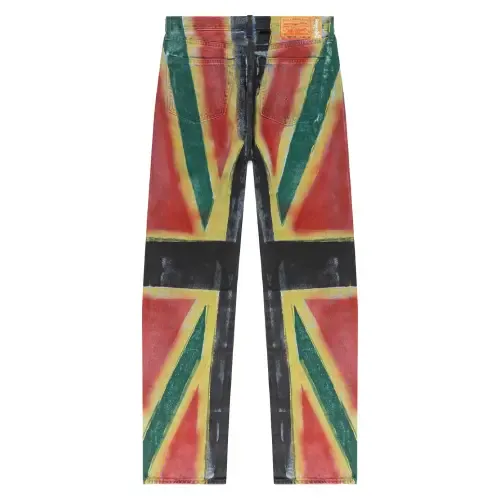
Denim Tears jeans stand at the intersection of fashion, history, and cultural truth, transforming a familiar garment into a meaningful statement. More than just jeans, they represent a narrative—one that speaks of memory, resilience, and the ongoing dialogue between the past and the present. Created under the vision of Tremaine Emory, Denim Tears jeans elevate denim from a wardrobe staple into a canvas for storytelling, making them deeply beautiful in both form and purpose.
At first glance, Denim Tears jeans may appear simple, even understated. But their power lies in what they carry beneath the surface. Denim itself has a long and complex history. Originally worn by laborers and working-class communities, it became a symbol of endurance, rebellion, and authenticity. By choosing denim as the foundation of his work, Emory aligns the brand with generations of people who built culture through strength and creativity, often without recognition. Denim Tears jeans honor that lineage by acknowledging where the fabric—and the culture around it—comes from.
One of the most recognizable elements of Denim Tears jeans is the cotton wreath motif. This symbol is not decorative in a shallow sense; it is intentional and deeply reflective. Cotton is inseparable from the history of Black Americans, tied to centuries of forced labor and exploitation. By placing this imagery on jeans, Emory reclaims cotton as a symbol of remembrance rather than silence. The jeans quietly challenge the wearer and the observer to confront history, not to dwell in pain, but to recognize truth as the foundation of progress.
The beauty of Denim Tears jeans comes from this honesty. In an industry often driven by trends and surface-level aesthetics, these jeans stand apart by refusing to disconnect style from meaning. They do not rely on loud branding or excessive embellishment. Instead, they communicate through symbolism and restraint. This subtlety makes them powerful. The jeans invite thought rather than demand attention, allowing the story to unfold naturally through conversation and curiosity.
Another defining quality of Denim Tears jeans is their emotional depth. They acknowledge that beauty and pain can coexist. The designs do not attempt to erase trauma, nor do they sensationalize it. Instead, they treat history with care and respect. This approach gives the jeans a sense of dignity. Wearing them feels less like following a trend and more like carrying a piece of cultural memory forward. The garment becomes a bridge between generations, connecting past struggles with present expression.
Craftsmanship also plays an important role in the appeal of Denim Tears jeans. The fit, wash, and construction feel deliberate, reinforcing the idea that these pieces are meant to last. They are not disposable fashion items meant to be worn briefly and forgotten. Their durability mirrors the resilience of the stories they represent. Over time, as the jeans fade and soften, they become even more personal, shaped by the life of the wearer. This aging process adds another layer of meaning, turning each pair into a unique archive of lived experience.
Denim Tears jeans also challenge traditional definitions of luxury. Instead of measuring value through excess or exclusivity alone, they redefine luxury as significance. The worth of the jeans comes from their message, their cultural grounding, and the respect they show to history. This shift is important in a world where fashion is often fast, impersonal, and disconnected from human experience. Denim Tears slows fashion down, reminding people that what we wear can reflect what we value.
The cultural impact of Denim Tears jeans extends beyond clothing. They have become part of a broader conversation about authorship, representation, and respect within fashion. By centering Black history and creativity without compromise, the brand asserts that these stories deserve space and seriousness. Denim Tears jeans do not ask for approval; they exist with confidence, grounded in truth. This confidence resonates with people who see fashion as a form of self-expression and cultural participation.
Ultimately, Denim Tears Hoodie are beautiful because they are purposeful. They prove that jeans—one of the most common garments in the world—can still carry depth and meaning. They show that fashion does not have to choose between aesthetics and substance. By blending history, identity, and design, Denim Tears jeans become more than something you wear. They become something you stand for.