

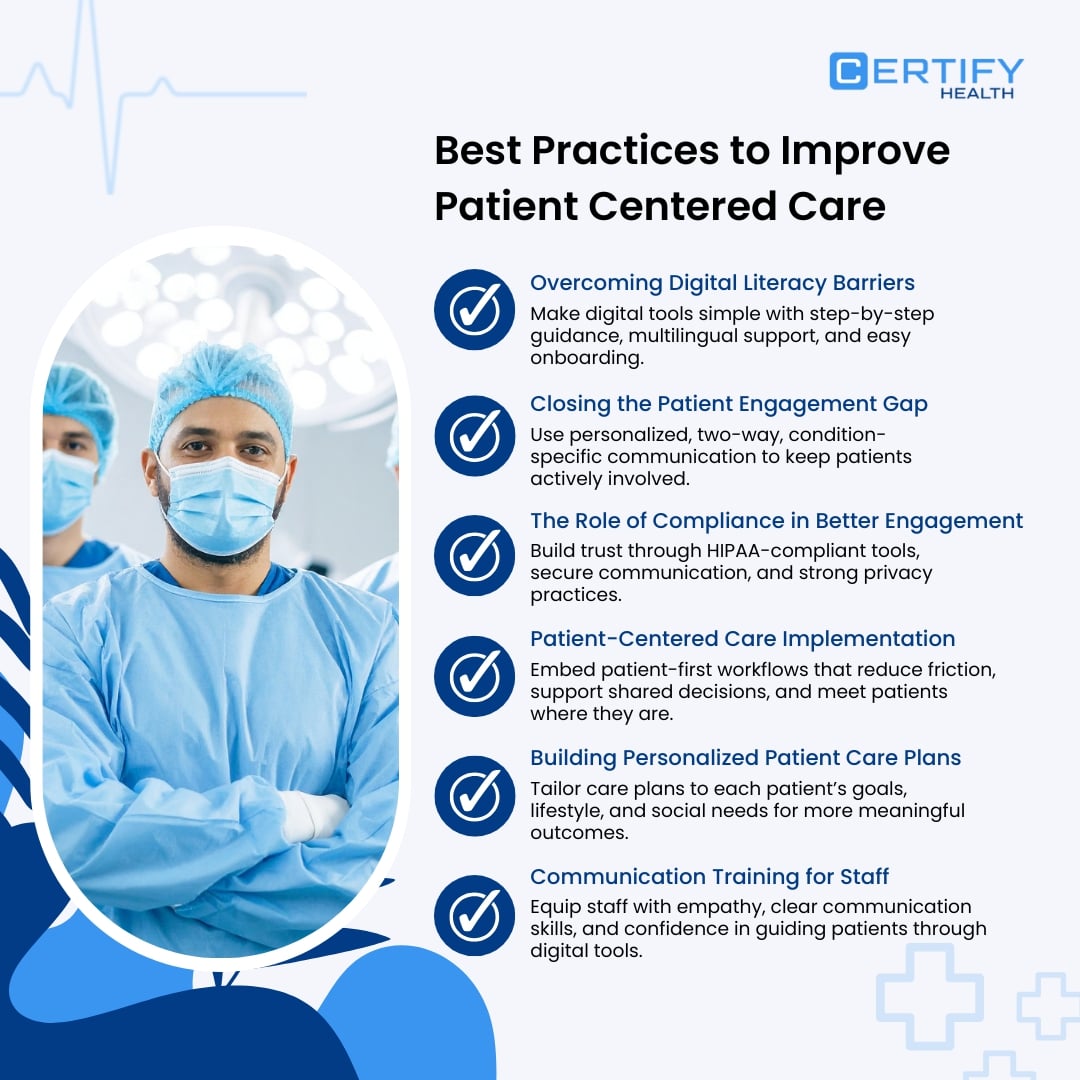
Patient-centered care has become a cornerstone of quality healthcare delivery. As patients increasingly expect personalized, transparent, and convenient healthcare experiences, providers must adopt strategies that place patients at the heart of every interaction.
Improving patient-centered care is not only essential for patient satisfaction but also for better health outcomes, stronger trust, and long-term practice success. The following best practices outline how healthcare organizations can enhance patient-centered care through engagement, communication, personalization, and compliance-driven approaches.
Overcoming Digital Literacy Barriers
Digital health tools have transformed how patients interact with healthcare providers, from online appointment scheduling to virtual consultations and patient portals. However, not all patients are equally comfortable using digital platforms. Overcoming digital literacy barriers is a critical step toward patient-centered care.
Healthcare organizations should focus on simplifying digital tools and offering step-by-step guidance to patients. Multilingual support, clear instructions, and intuitive interfaces help patients feel confident navigating digital systems. Providing onboarding assistance, whether through staff support or instructional resources, ensures patients can fully benefit from digital healthcare services without feeling overwhelmed or excluded.
Closing the Patient Engagement Gap
Patient engagement plays a vital role in improving healthcare outcomes. When patients are actively involved in their care, they are more likely to follow treatment plans, attend appointments, and communicate openly with providers. Closing the patient engagement gap requires moving beyond one-way communication.
Healthcare practices should implement personalized, two-way communication strategies that address individual patient needs. Condition-specific messaging, reminders, follow-ups, and educational content help keep patients informed and involved throughout their care journey. By fostering meaningful interactions, providers can build stronger relationships and encourage patients to take an active role in managing their health.
The Role of Compliance in Building Trust
Trust is a fundamental element of patient-centered care, and compliance plays a crucial role in earning and maintaining that trust. Patients expect their personal and medical information to be protected at all times. Adhering to healthcare regulations such as HIPAA ensures that patient data remains secure and confidential.
Using compliant communication tools and maintaining strong privacy practices reassures patients that their information is handled responsibly. Transparency about data usage and security policies further strengthens trust. When patients feel confident that their privacy is protected, they are more likely to engage openly and communicate honestly with healthcare providers.
Implementing Patient-Centered Care Workflows
Patient-centered care requires intentional workflow design that prioritizes patient needs and reduces friction across healthcare interactions. Traditional workflows often focus on operational efficiency alone, but modern patient-centered workflows balance efficiency with empathy.
Embedding patient-first processes—such as streamlined check-ins, flexible scheduling, and clear communication pathways—helps reduce stress and confusion for patients. Supporting shared decision-making empowers patients to participate in their care plans, ensuring treatment decisions align with their preferences, values, and circumstances. Meeting patients where they are, both physically and digitally, enhances accessibility and satisfaction.
Building Personalized Patient Care Plans
Personalization is at the core of patient-centered care. Every patient has unique goals, lifestyles, and social factors that influence their healthcare experience. Building personalized care plans allows providers to deliver more meaningful and effective care.
Tailoring treatment plans to individual needs improves patient adherence and outcomes. Personalized care considers medical history, lifestyle choices, cultural factors, and personal preferences. When patients feel seen and understood, they are more likely to trust their providers and remain engaged throughout their healthcare journey.
Strengthening Communication Through Staff Training
Even the most advanced healthcare technologies cannot replace the human element of care. Effective communication remains essential to delivering patient-centered experiences. Training staff in empathy, clear communication, and patient guidance equips them to support patients at every touchpoint.
Staff should be confident in explaining digital tools, addressing patient concerns, and guiding patients through complex processes. Empathetic communication helps reduce anxiety, improve understanding, and foster positive relationships. Well-trained staff serve as the bridge between technology and patient care, ensuring a seamless and supportive experience.
The Long-Term Benefits of Patient-Centered Care
Improving patient-centered care offers long-term benefits for both patients and healthcare organizations. Practices that prioritize engagement, personalization, compliance, and communication often see higher patient satisfaction, better health outcomes, and improved retention rates.
Additionally, patient-centered care contributes to operational efficiency by reducing no-shows, improving adherence, and minimizing misunderstandings. As healthcare continues to evolve, organizations that adopt patient-centered best practices will be better positioned to meet patient expectations and remain competitive.
Conclusion
Patient-centered care is no longer optional—it is essential for delivering quality healthcare in today’s environment. By overcoming digital literacy barriers, closing engagement gaps, ensuring compliance, implementing patient-first workflows, personalizing care plans, and investing in staff communication training, healthcare providers can create more meaningful patient experiences. These best practices help build trust, improve outcomes, and support sustainable growth, making patient-centered care a powerful foundation for modern healthcare success.