

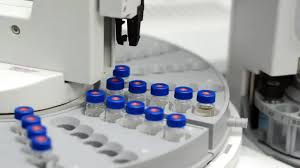
Ensuring a drug delivers the correct active ingredient is key to pharmaceutical safety and efficacy. Dose formulation analysis (DFA) verifies that test articles in preclinical and clinical studies have the correct concentration and uniformity, meeting regulatory requirements from bodies such as the FDA and EMA. Without proper DFA, toxicology studies and clinical trials risk delays or rejection.
Importance of Dose Formulation Analysis
Dose Formulation Analysis confirms the concentration, stability, and uniformity of a test article in its vehicle. This verification is essential for quality control and reliable study results. If a formulation is not homogeneous, dosing can vary between subjects, affecting safety and efficacy outcomes. Accurate DFAs ensure consistent dosing across all study phases, improving the reliability of bioavailability and bioequivalence data. This precision also supports regulatory requirements by demonstrating that the drug remains stable under the study conditions from preparation through administration.
Common Dose Formulation Analysis Techniques
Several established techniques form the backbone of routine analysis in pharmaceutical labs. The choice of method depends largely on the analyte’s physicochemical properties and the formulation matrix.
High-Performance Liquid Chromatography (HPLC)
HPLC remains the workhorse of pharmaceutical analysis. It separates components in a mixture based on their interactions with the stationary and mobile phases.
- Principle and applications: HPLC is widely used to quantify drug potency and purity across various formulations. It is applicable to both small and large molecules.
- Advantages and limitations: It offers high precision and robustness. However, run times can be long compared to newer technologies, and it requires substantial solvent usage.
- Method development and validation: Establishing a robust HPLC method involves optimizing the column type, mobile phase composition, and detection wavelength to ensure specificity and linearity.
Ultra-Performance Liquid Chromatography (UPLC)
UPLC uses sub-2-micron particle columns to achieve superior separation efficiency and faster run times.
- Principle and advantages: Operating at higher pressures than HPLC, UPLC provides faster run times and better resolution. This makes it ideal for high-throughput environments where time is a critical factor.
- Applications: It is increasingly used for complex formulations that require rapid analysis without sacrificing sensitivity.
- Considerations: Method optimization requires specialized instrumentation capable of handling higher backpressures, and rigorous sample preparation is required to prevent column clogging.
Must Read: HPLC Lab: Comparing HPLC, UHPLC, and LC-MS Techniques
Gas Chromatography (GC)
For volatile and semi-volatile compounds, GC is the technique of choice.
- Principle and applications: GC separates compounds based on their volatility and interaction with the column’s stationary phase. It is essential for analyzing residual solvents and specific drug substances.
- Sample preparation: Techniques often involve headspace analysis or liquid-liquid extraction to isolate the analyte from the matrix.
- Detection methods: Common detectors include Flame Ionization Detection (FID) for general organic compounds and Mass Spectrometry (MS) for identification.
Spectrophotometry (UV-Vis)
UV-Vis spectrophotometry measures the absorption of light by a sample at specific wavelengths.
- Principle and applications: It is used to quantify compounds with chromophores.
- Advantages: This technique is simple, cost-effective, and delivers rapid results for less complex formulations.
- Limitations: It lacks the specificity of chromatographic methods, making it unsuitable for formulations with interfering excipients or degradation products.
Mass Spectrometry (MS)
MS measures the mass-to-charge ratio of ions, providing structural information and quantification.
- Principle and applications: It is often coupled with separation techniques (LC-MS or GC-MS) to analyze complex biological matrices.
- Advantages: MS offers unmatched specificity and sensitivity, allowing for the detection of trace levels of analytes.
- Coupling with HPLC and UPLC: This combination enables specific large-molecule bioanalysis and the identification of impurities that co-elute with standard UV detection.
Advanced Techniques in Dose Formulation Analysis
As drug formulations become more complex, encompassing biologics and nanomedicines, advanced analytical techniques are required to fully characterize them, including support from an Msd Assay Service.
Liquid Chromatography-Mass Spectrometry (LC-MS)
LC-MS combines the physical separation capabilities of liquid chromatography with the mass analysis capabilities of mass spectrometry.
- Advantages: It provides detailed information on molecular weight and structure, making it indispensable for analyzing complex mixtures.
- Applications: It is widely used for metabolite identification and quantification, as well as for assay development and validation of novel therapeutics.
- Considerations: Method development is complex and requires highly skilled analysts to mitigate matrix effects that can suppress ionization.
Nuclear Magnetic Resonance (NMR) Spectroscopy
NMR exploits the magnetic properties of certain atomic nuclei to determine physical and chemical properties.
- Principle and applications: It is the gold standard for structural elucidation of drug substances and impurities.
- Advantages: NMR is non-destructive and provides a direct look at the molecular environment.
- Limitations: Its relatively low sensitivity makes routine quantification challenging compared to LC or MS methods.
Conclusion
Dose formulation analysis is essential for ensuring that drug products meet required standards of concentration, uniformity, and stability throughout development and clinical testing. By using established and advanced analytical techniques, laboratories can accurately characterize formulations, support regulatory compliance, and reduce variability in study outcomes. A reliable DFA not only safeguards patient safety but also strengthens the integrity of bioanalytical and pharmacokinetic data, helping keep drug development programs on track.